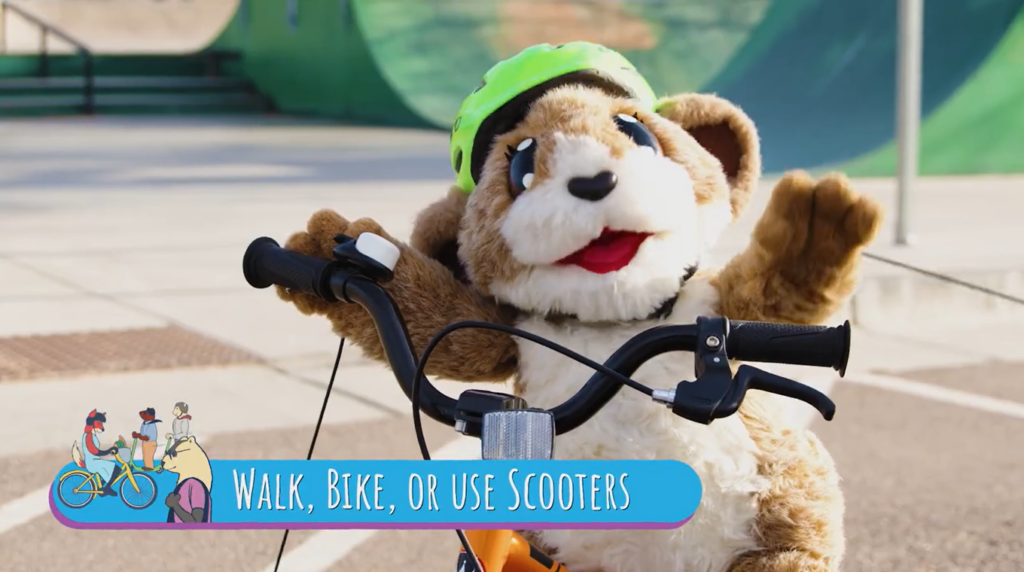
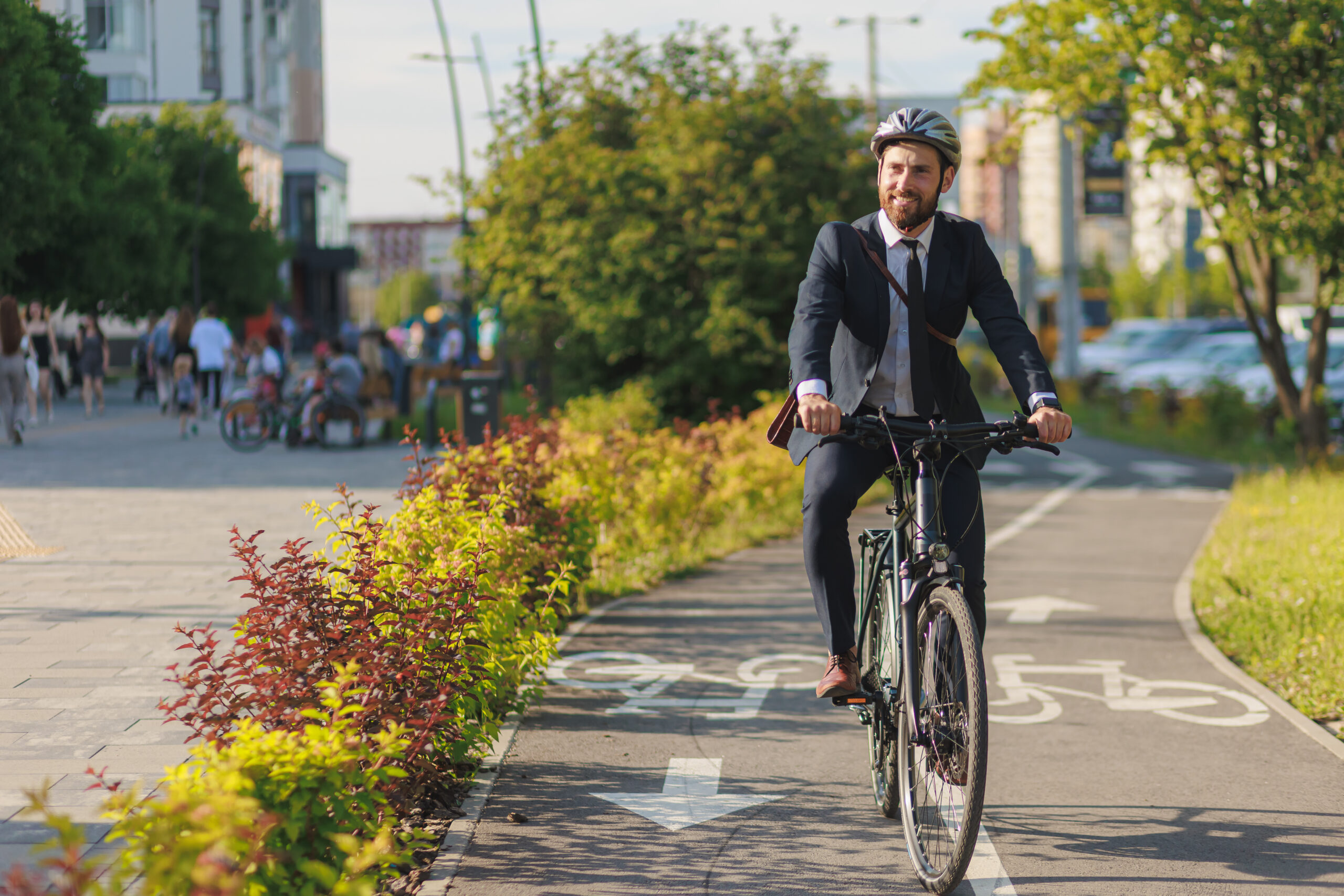
It feels great to get out on two wheels in the summer, but June is an especially good time to try riding a bike to run errands or get to work!
Colorado celebrates Bike to Work Day this year on Wednesday, June 24, and many communities across the Front Range offer breakfast stations where you can grab a coffee and a bite on your way in to the office. (Nothing wrong with using free breakfast burritos for motivation!)
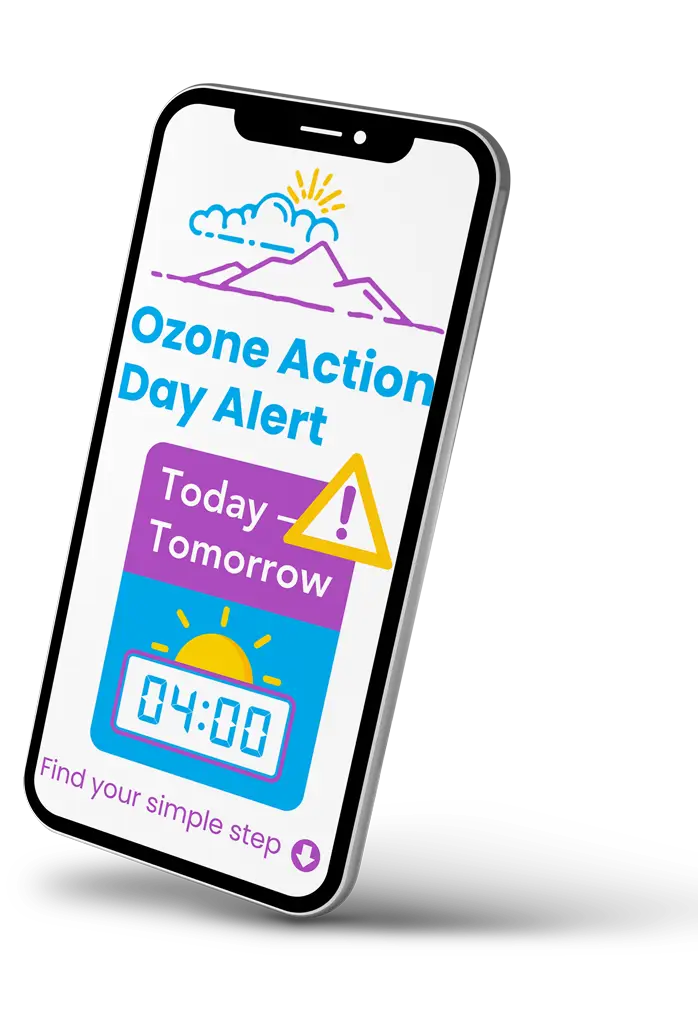
Whether you’re new to getting around by bike, or it’s just been a while since being in the saddle, it’s a fun way to avoid traffic and reduce emissions that contribute to ground-level ozone formation, our most pressing air pollution issue in the summer. Plus, e-bikes have made commuting by bike more accessible than ever!
Here’s what you need to know.
Plan your trip by bike
Get ready to roll! Switch Google Maps to the bike option to scout out routes, or try route-finding options like Denver’s Bike Streets and Bikemap. Remember: Bikes should not be ridden on sidewalks, and bicyclists must yield to pedestrians.
You can also integrate biking into a trip with public transit using the RTD app. Busses and trains have bike racks, and there’s free bike storage along major transit routes.
What to wear
If you live in Colorado, you know the rules: dress in layers, because the weather can change in a flash! In summer, morning rides can be cool (maybe), and the ride home can be either hot or rainy. Stash a light jacket in your bag and a pair of sunglasses and you’ll be set.
Don’t forget your helmet — they’re required for all class 3 e-bike operators and passengers under 18! And if riding at sunrise, dusk, or after dark, bike lights and reflectors are also a key component of bike safety, allowing drivers to see you more easily as you share the road. (They’re also required by law.)
If you work in an office building, inquire with your workplace if there are indoor bike racks and showers available, to make bike commuting a smoother experience.
Where to repair your bike
Many bike paths have free bike repair stations along the way for the basics. But check out your local library if you need free tools to get ready for the season. Denver Public Library locations and many others lend basic bike repair tools to library card holders.
Reduced cost bikes, bike maintenance, fix-a-flat classes, and other resources are available through local bike shops and community groups such as Bikes Together, Boulder Community Cycles, and Bicycle Colorado.
E-bike sharing by city in Colorado
Don’t have your own bike? Some cities on the Front Range have partnered with different companies to offer e-bike sharing to residents and visitors. For example, Denver now partners with Veo, Boulder’s e-bike program is BCycle, Fort Collins uses Spin, and Greeley is running a pilot with Spin. Downloading the app for the city’s program before you leave home will set you up for success when you’re ready to ride.
E-bike safety: Know your bike’s power
E-bikes have a power assist to boost your pedaling, but you should know a little bit more before you hop on one.
There are three classes of e-bikes, which have motors that max out at 750 watts:
- Class 1 provides power only when the rider is pedaling. The motor stops at 20 mph.
- Class 2 provides power via throttle and pedaling. The motor stops at 20 mph.
- Class 3 provides power only when the rider is pedaling, but these motors stop at 28 mph. These bikes must have a speedometer. Riders must be 16 and older.
Class 3 bikes are limited to streets or designated paths. (Check local rules for e-bikes; many municipalities don’t allow them on trails.) When you’re on the street, stick to the bike lane and follow the normal rules of traffic for a car: Stop at red lights and stop signs and signal when you turn. Pass slower riders on the left.
Colorado e-bike discounts and rebates
You can get help buying your own e-bike with a variety of discounts, tax credits, and rebates available to Front Range residents. In 2026, participating Colorado retailers can offer a $225 discount off a qualifying e-bike purchase at the point of sale. Click here for a list of current participating retailers.
Your county or municipality might also offer e-bike rebates, like Denver’s e-bike rebate program, which releases a new round of rebates several times a year. These local programs can add up to big savings — Denver’s standard e-bike rebate is $675 in 2026, which combines with the state rebate to give you a total of $900 off your e-bike purchase!