
All of that can stick around your neighborhood’s air, where your kids and dogs are outside playing. Plus, operating a gas-powered leaf blower puts you in close proximity to the exhaust the whole time you’re running one.
These emissions from gas-powered lawn equipment — including leaf blowers — also contribute to higher concentrations of ground-level ozone pollution here in the Colorado Front Range each summer!
Sound bad? Unfortunately, it gets worse. Gas leaf blowers can also expose you to sound above 100 decibels—equivalent to a jet engine or jackhammer. Because hearing loss can occur with exposure to noise exceeding 85 decibels, OSHA requires workers exposed to these decibel levels to have access to hearing safety devices.
So what can you do when the neighborhood trees start dropping piles of leaves in your yard?
- One approach is to “Leave the leaves” because they provide important habitat to for pollinators and other helpful insects and birds over the winter months.
- If you’re physically able to, you can rake the leaves. This low-tech solution can be a workout, though, so only rake leaves if your back and heart health allow for this activity. You can make the work lighter by taking it slow and only raking leaves when they’re dry, rather that wet and heavy.
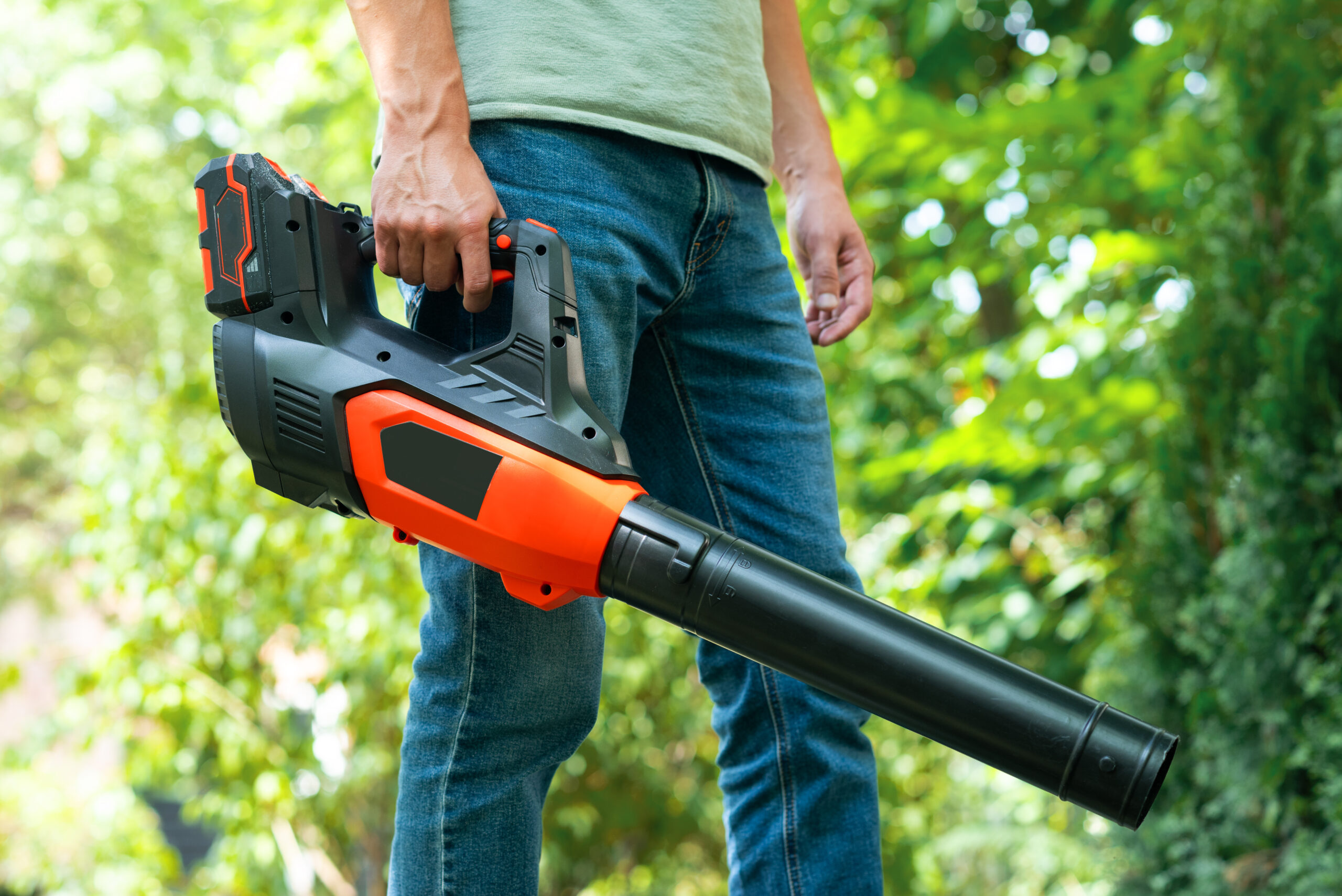
- Upgrading to a modern, battery-powered electric leaf blower is a cleaner option than gas. Plus, it’s much quieter to operate. Your ears—and your neighbors—will thank you.
How to get a 30% discount on an electric leaf blower in Colorado
Thanks to a law that went into effect in 2024 and was extended to 2030 earlier this year, Coloradans can get a 30% point of sale discount on electric lawn mowers, leaf blowers, trimmers, and even snow blowers at participating retailers statewide. Unlike a rebate, this point-of-sale discount is one you can get immediately when you buy an electric leaf blower — no need to get a coupon or apply for the discount!
You’ll have to buy from one of many participating retailers across the state, so it’s best to call the store ahead of time to confirm that they’re participating in the program.
Ready to upgrade? Read more about electrifying your lawn equipment, and take a look at the Colorado Public Interest Research Group’s list of participating lawn and garden retailers.

Jenn Fields
Communications Contributor
Regional Air Quality Council