Winter’s arrival in Colorado means crisp but sunny days, and a seasonal shift in air quality concerns on the Front Range.
In summer, our primary air quality concern is ground-level ozone, which forms when volatile organic compounds (VOCs) and nitrogen oxides (NOx) react in the sun and heat. In winter, particulate matter — tiny particles of dust, dirt, and smoke — is the bigger concern.
(Particulate matter is often referred to as “PM2.5” or “PM10,” when referencing the specific size or health impact of these tiny particles.)
Temperature inversions in winter can trap particulate matter, along with nitrogen and sulfur oxides, near the ground, creating a visible haze that’s sometimes referred to as an older term: Denver’s brown cloud.
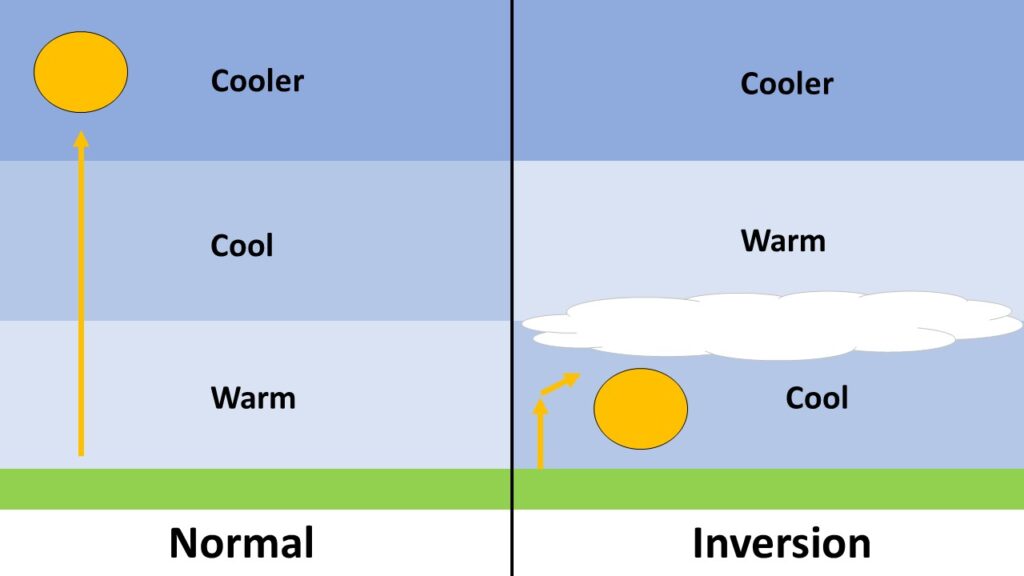
Temperature inversions are especially likely on clear, cool days with low humidity and atmospheric stability (wind can mix the warm and cold air, breaking the “lid” created by the layer of warm air above the cold air at the surface). Denver’s sunny winter days with low humidity and the city’s location in a basin make it especially susceptible to this atmospheric phenomenon.
Poor air quality from particulate matter in the winter can affect lung function, cause respiratory symptoms, and even trigger an irregular heartbeat or heart attack. But you can stay on top of our air quality daily by signing up for winter air quality alerts from Colorado’s Department of Public Health and Environment.
Plus, you can help make a difference for our air quality (and your health) on the Front Range this winter by taking a few simple steps when it’s cold outside:
Only warm up your car for 30 seconds
Really! Modern gas-powered cars are designed to warm and lubricate an engine’s essential parts quickly in winter, making extended warm-ups unnecessary. If your car was made after 1980, 30 seconds is enough, according to AAA. (If your car is a pre-1980 model, 2 to 3 minutes will do.)
Three exceptions to the 30-second rule:
- Heating up your car to defrost your windshield: Snow, ice, and fog can all impede a driver’s ability to see through their windows and drive safely. Drivers are legally obligated to fully clear their windshields before driving on Colorado roads, per Colorado Revised Statute 42-4-201, which covers obstruction of view.
- Extreme cold: Even a newer engine might benefit from a few extra minutes of warm-up time if your car is stuck in snow or temperatures are very low.
- Towing: An extended warm-up can help prevent overheating when you’re towing a heavy load.
Idle your car less
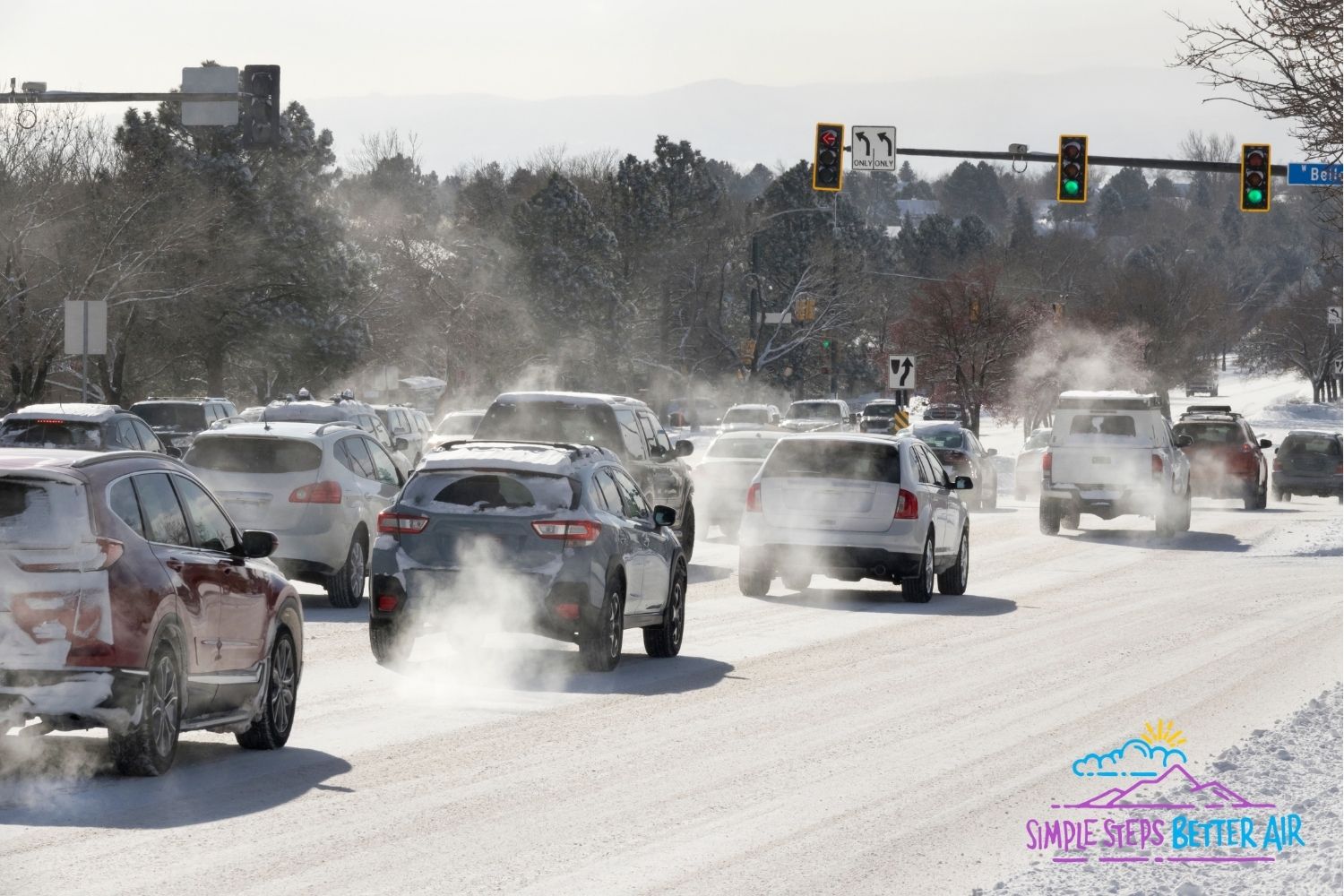
We get it – your passenger is grabbing carry-out, or you’re in the pick-up line at school. But if your car cabin is warm, consider turning off the engine while you wait. Idling a gas-powered engine for just one minute produces 150 balloons’ worth of emissions, and according to the U.S. Department of Energy, idling your car for more than 10 seconds uses more fuel than turning your car off and restarting it! Extended idling can cause wear and tear and burns extra gas, too, which means you’re saving money when you idle less.
Pro tip: Keep an extra pair of gloves or a hat in your car, for those short bits of time when you’re waiting with the car turned off.
Good to check: Some newer vehicles have an “Auto Start-Stop” feature, which automatically turns off a vehicle’s engine when fully stopped (like at a red light), and quickly restarts it when the driver is ready to move, helping to reduce emissions.
Upgrade to an EV or hybrid vehicle
In addition to emissions reductions, the super-efficient electric motors in EV and hybrid vehicles don’t require a warm-up in winter—they’re ready to go when you are. Plus, your EV’s climate control can warm up the cabin via the battery without turning on the engine. If you’re looking to upgrade, be sure to check out Colorado’s Electric Vehicle Tax Credits.
Upgrade to an electric snowblower
While we may be a bit overdue on snow this season, an electric snowblower can save your back and your heart after a big snowstorm. This winter is a great time to upgrade: the tax credit that saves Coloradans 30% on all electric lawn and garden equipment, including snowblowers, has just one year left!
Take advantage of this deal for yourself – or as a gift for family, friends, or neighbors – before it expires on Jan. 1, 2027. The Colorado Public Interest Research Group (CoPIRG) maintains a list of participating retailers where you can get this point-of-sale discount, but please call the store in advance to confirm their participation in the program. (Snowplows and other devices that attach to a tractor or vehicle do not qualify for the credit.)
Ride the Snowstang
Tired of sitting in traffic on I-70? Take the bus instead! Snowstang offers an easy, convenient, and affordable way to get to some of Colorado’s best mountain resorts. Ride Snowstang to A-Basin, Breckenridge, Copper, and Loveland this season, serving three Denver metro stations: Union Station, Federal Center, and Wooly Mammoth Park n Ride.

Jenn Fields
Communications Contributor
Regional Air Quality Council